Shipbuilding in Korcula
Shipbuilding in Korcula is very old and certainly older than the written documents about it. As an Illyrian pirate stronghold and a Greek colony of the Antiquity Korcula was an important centre.
Since it was inhabited by the Neretva pirates, it is reasonable to presume that boats were constructed there as most of the activity of the town was carried out on the sea.
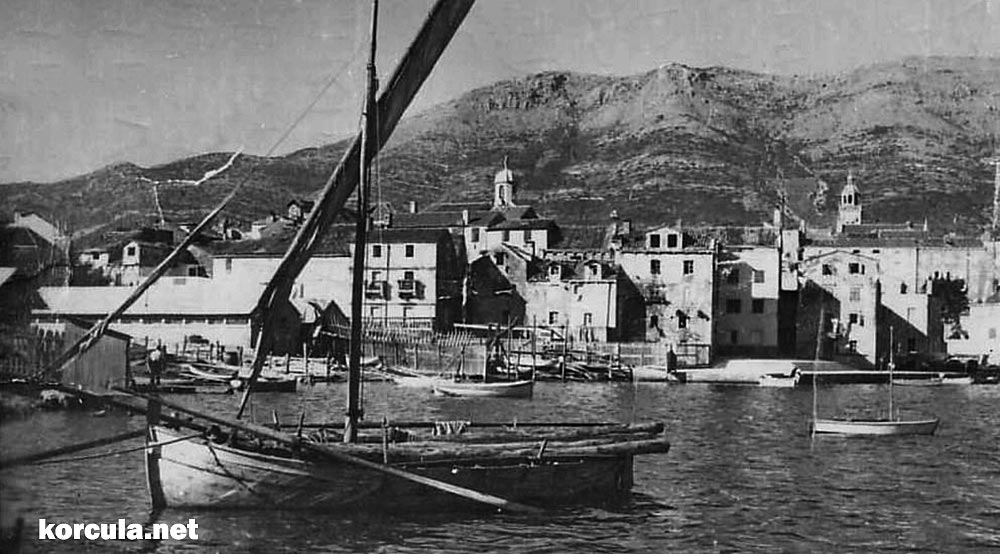
Although it cannot be proved, it is believed that the boats known under the names of liburna and kerkur(a) were invented by the Korcula boat builders.
The Statute of the City and Island of Korcula from 1214 is considered to be the earliest document about shipbuilding in Korcula where the craft was mentioned indirectly in the ordinances concerning wood-cutting and the production of tar for the needs of shipbuilding.
In the 14th century in the local documents, there were mentions of “kalafats” (masters who filled the fissures between boards) and “marangoni” (craftsmen in wood) witnessing the existence of shipbuilding tradition.
In 1418 the building of a boat of the caraca type was mentioned in a court document in which a certain Vukić, in the service of the nobleman Radetinov, accused a “kalafat” Bogić for attacking him on the spot where the caraca was being built.
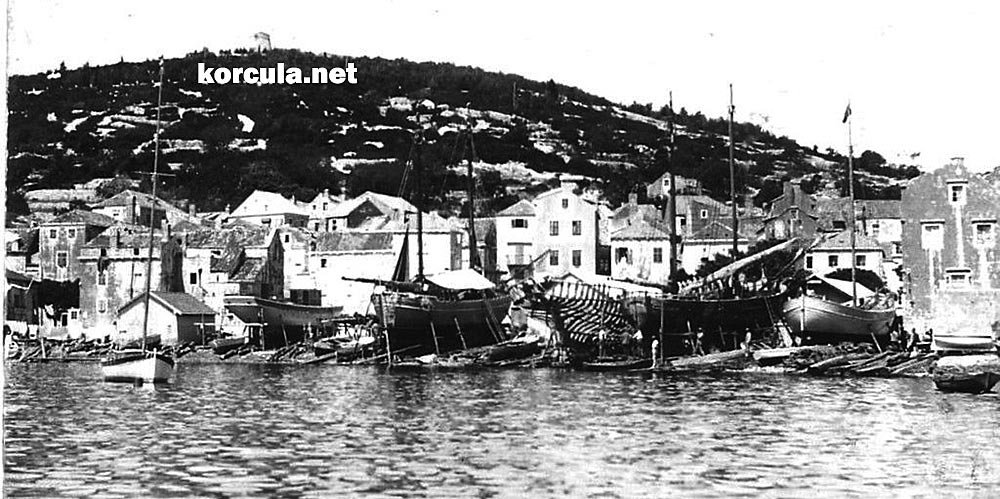
In 1420 Korcula came under the authority of Venice when it already had developed its shipbuilding. Venice granted considerable political autonomy to the city but it imposed economic limitations, primarily to hinder the competition of the Korcula shipyards to the Venetian arsenal.
The Korcula shipbuilders petitioned the Venetian authorities and they were allowed to construct boats up to 500 “stari” but only for Christian customers. At the beginning of the 16th century, this limit was raised to 2,000 “stari”.
Popular Routes: Split to Korcula, Korcula to Split, Dubrovnik to Korcula, Korcula to Dubrovnik
The Venetian authorities in the course of time showed more understanding for the shipbuilding industry of Korcula thus that they had their own boats built and repaired there in spite of their big arsenal in Venice, and in 1623 all restrictions were lifted. In a report by the Venetian Giustiniano to the Venetian administration about the economic situation in Korcula he emphasized its stonemasons and shipbuilders for the quality of their work.
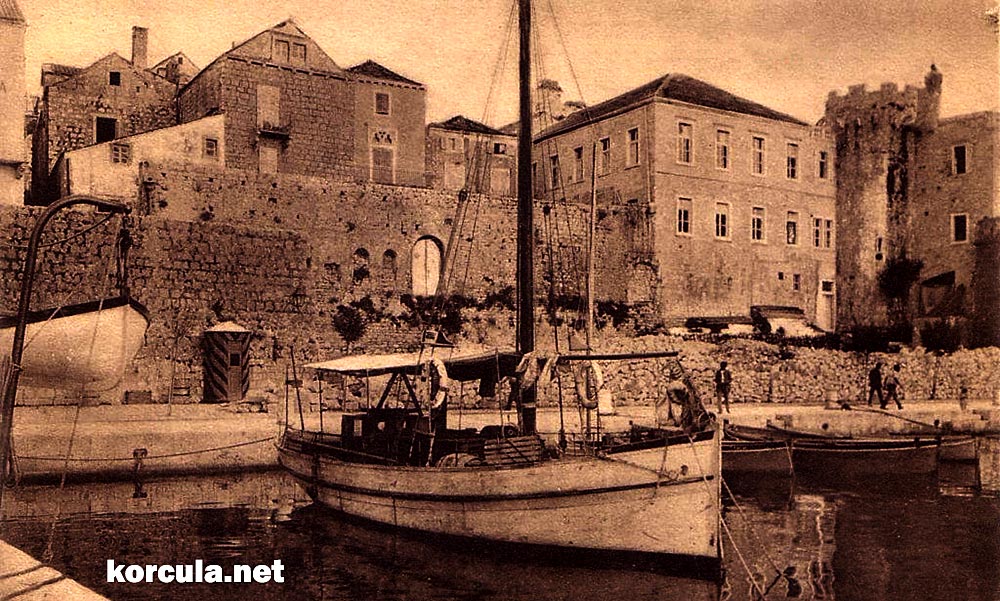
Venetian syndics Cristofor Valier and Frane Errizzo report to their Government about the damage done to the woods of Korcula which was damaging for the shipbuilding industry. Otherwise, according to the earliest documents and the Statute of Korcula, local authorities had paid attention to their woods in the form of precise ordinances, and considerable fines were imposed for their violation. In 1746 an open conflict occurred between the shipbuilders and the peasants about which the shipbuilders made a report to the Venetian Doge.
In 1623 the Korcula shipbuilders founded their association under the name of the Bank of St. Joseph which was organized like a guild. Its regulations were confirmed by the Governor-General of Dalmatia and Albania, Frano Mo1in, on 26 June 1623. The association had humane and social goals and very strict rules of behavior for their members.
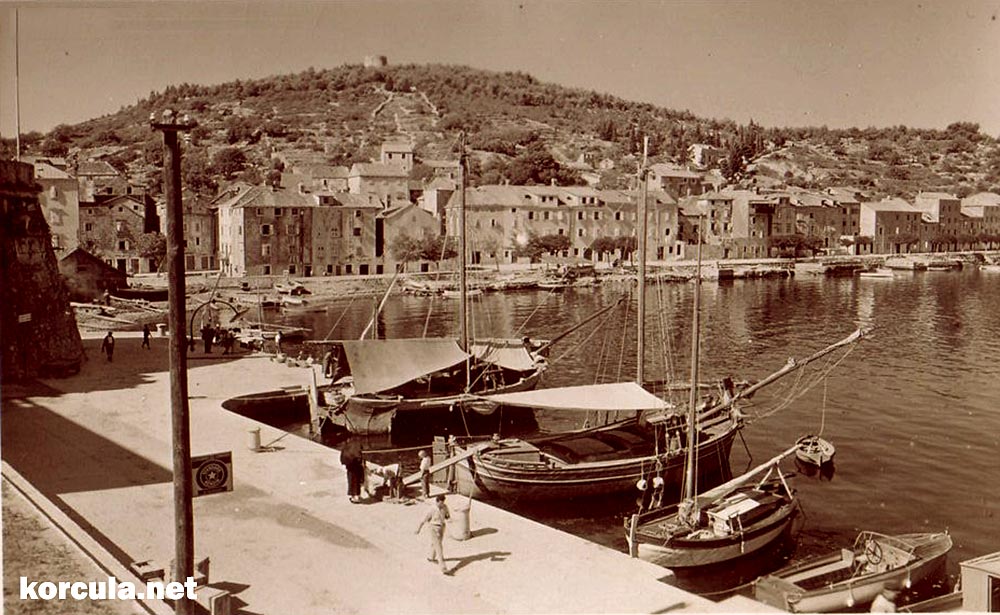
Nobody could get a job in the Korcula shipyards unless he was a member of the association. Apprentices had to learn the craft for five years before becoming members of the association. The membership fee was paid according to the social status of the member so that masters paid different fees from journeymen etc.
The social elements of the association consisted of the aid to the members in need either by supporting the member or in offering help for the wedding of a daughter, or in case of death or similar. The founding of the association was a significant step forward, as from that year on all limitations in the construction of the boats were lifted and in 1776 the Venetian authorities moved their shipyard from Hvar to Korcula.
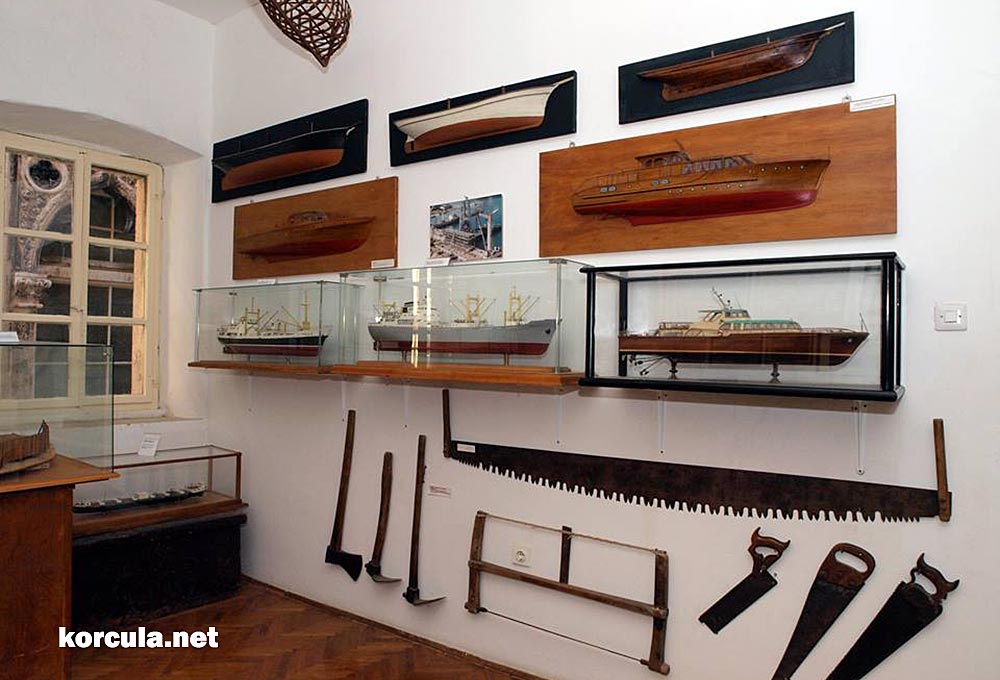
Various authors of the period describe the significance of the shipbuilding industry in Korcula. In his travel notes published in 1688, the Englishman Spon mentions the importance of Korcula for Venice as in its shipyards Venetian boats were constructed and repaired. Dr.Ante Caramaneo, a priest from Vis, in his writings mentioned that the production of tar for boats was sizeable in Korcula and that the town boasted excellent craftsmen. The author of the well-known work ‘Isolario’,Coronelli, in a chapter on Korcula, said that Korcula possessed large and rich woods offering the material for shipbuilding in which 1ots of its population was involved.
The local historian Paulini wrote the following about the Korcula shipbuilding: “The diligence of the population was to be seen in their many crafts and it was particularly outstanding in its famous shipyard, so that I consider it after the Venetian to be the most significant in the whole of the Adriatic with regard to the quantity of its production and the ability of its craftsmen.
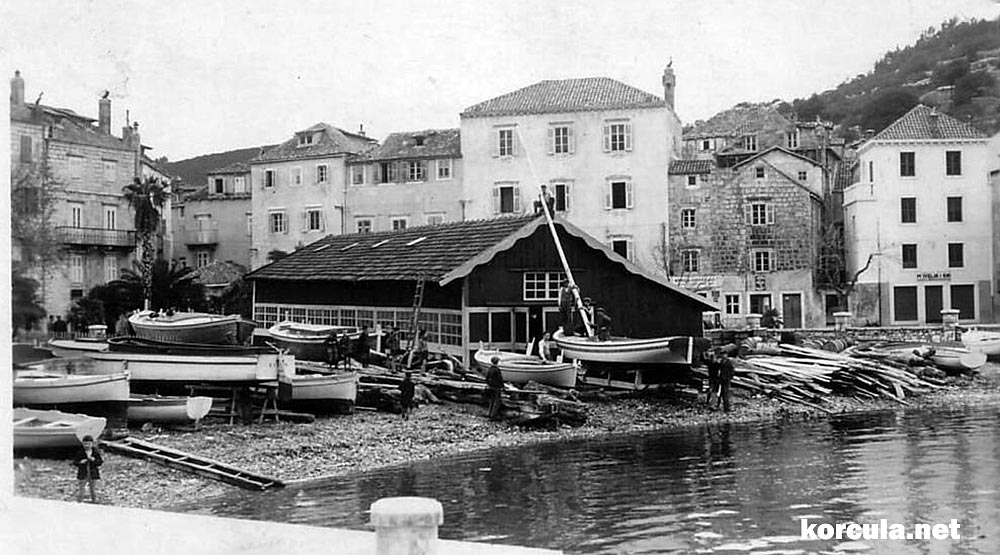
A permanent production of boats of al1 kinds is going on, both commercial vessels medium and large, and sometimes those for military purposes. In the last three years, I have seen that they have built here seven very nice ships, the smallest could carry 24 guns and the largest up to 40 large ones. And although Venice is well supplied with ships like those, still the old ones are often repaired here and new ones are constructed for her armada, and wonderful feluccas are built for the pleasure of her patricians.
“The Korcula shipbuilders have done a lot of work for their Dubrovnik customers, particularly until a shipyard was started at Gruz (port of Dubrovnik), as since then The Republic of Dubrovnik tends to protect it from the competition by Korcula. Indeed in 1569, the Government of the Republic banned the ordering of ships outside their own shipyards (Gruz and Lopud).
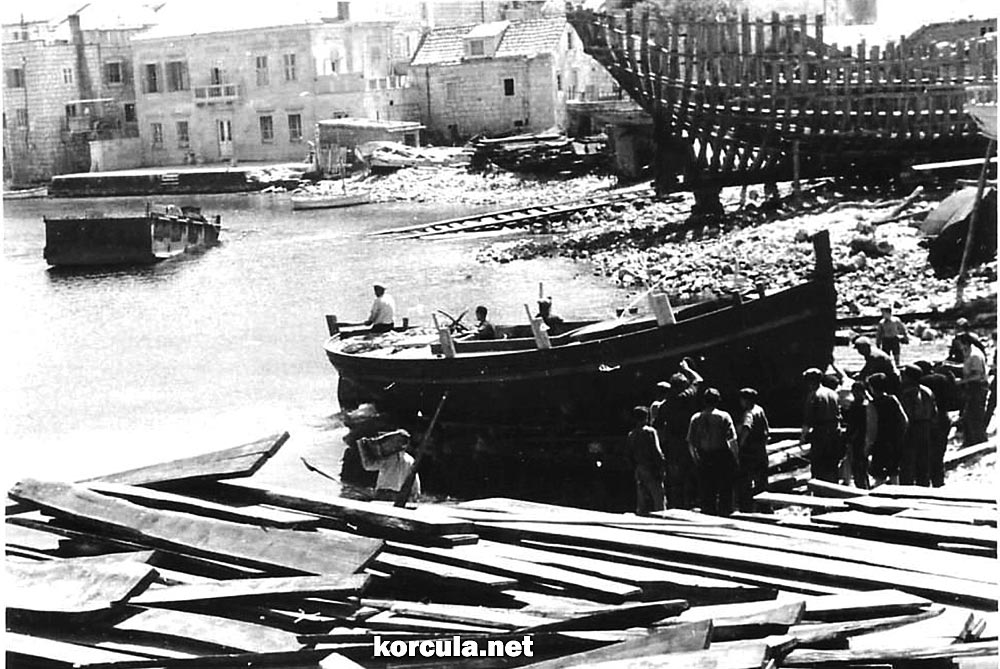
The development of shipbuilding in Korcula in the following centuries, especially in the 18th and 19th centuries, can best be seen from the “Memoir” of the Bank of St. Joseph published in 1868. Going through that document we shall find the following.
Between 1778 and 1815 not a single ship was built in Korcula owing to the dramatic political events in Europe. In the period between 1787 and 1797, while Korcula was under the Venetian rule, very small number of shipbuilders left Korcula (they were exempted from military service), but after the fall of Venice that number increased to reach its peak between 1859 and 1867 when out of the labour force of 505, 404 shipyard workers were absent, with only 100 remaining in the shipyard.
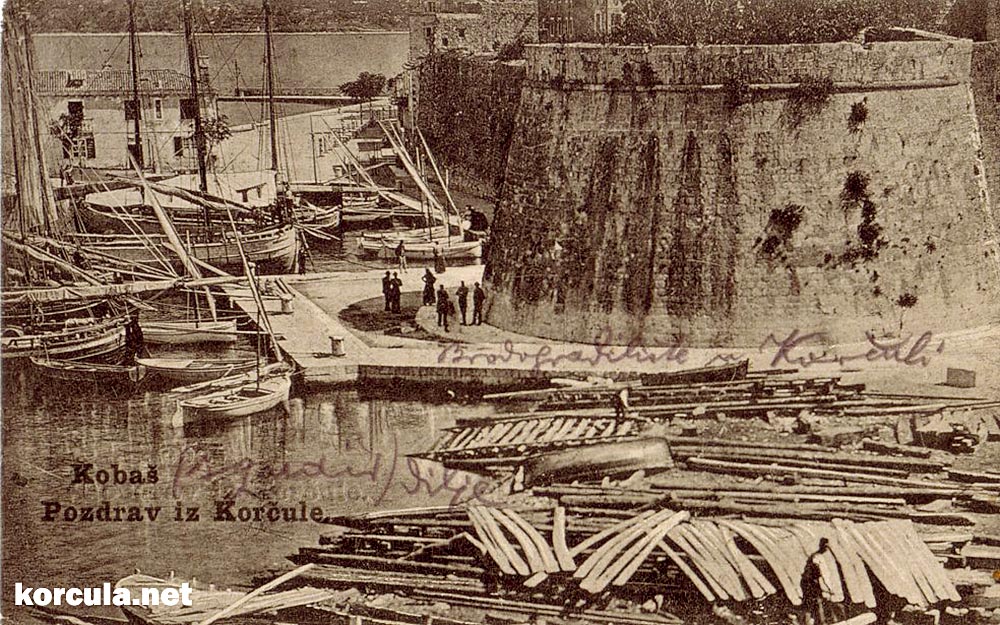
The shipbuilding in Korcula reached its peak in the 19th century between 1849 and 1859 when 9,752 ships of different sizes were constructed in comparison with the years 1859 and 1867 with only 2,400 ships built. Although the first ship driven by an engine appeared in 1807 this significant change had not affected the shipbuilding industry in Korcula unti1 the seventies of that century.
In the second half of the 19th century, the Korcula shipyards produced over twenty sailing ships between 30 and 550 tons which were a considerable success. The largest sailing ship constructed in Korcula was a “bark” called “The Brothers Fabris” of 550 tons, 44 meters long by 9 meters and 6 meters high. It had a crew of ten. It was owned by the brothers Fabris from Vrnik, a small island near Korcula. The boat had sailed for ten years until it was shipwrecked near Vlasningen in the Netherlands when both the boat sank and the crew was unaccounted for.
Owing to the frequent oscillations in the demand for ships on the market as well as the cutting short of the privileges for the shipyard workmen of being free of the national service, the number of workmen especially younger ones has diminished, and owing to the lack of job security many of them left Korcula and the country.
A number of master shipbuilders from Korcula started their own shipyards out of Korcula. The family of shipbuilders Foretić opened one in Rijeka, Brčić, Paunović, Vilović, Fabris, Depolo, Ivančević, Foretić, Falkone, in Istambul, Sardi, Sessa, Verzotti, Drušković, in Bujukdere, Smrkinić, Dobrišić, Fabris, in Alexandria, Depolo, Geričić, Foret i C Salečić, Verzotti , Vilović, · Pomenić at Ismir, De polo, Kapor, Bernardi in Odessa, Kapor in Marseilie, Vi lovic, Pesante at Galati, Kapor in Yalta, Fabris at Kercha, Krtica, Smrkinić in New York, Bongvardo, Kapor in New Orleans, Vidović, Ivančević at Mobile, Ivančević, in Buenos Aires, Sessa, Kalogjera, Kovačević, Paunović at Sulina.
Besides the mentioned places abroad, the Korcula boatbuilders founded shipyards along the Adriatic Coast. Thus in Kotor the shipbuilder Gjurgjević was operating his craft, Depolo in Split, Depolo in Stari Grad, Vilović in Orebic, Prančić and Mišulić at Bijela, Filippi in Betina, Sambrailo in Vela Luka, Filippi at Profura, Island of Mljet, Dužević and Filippi at Hodilja near Ston.
Many craftsmen from Korcula obtained a very high reputation and some of them became inspectors of the classification institution ‘Veritas’ among them Antun Foretić inspector for Korcula, Nickel Deploy for Split, Giovanni Smrkinić for Alexandria, Grgur Geričić for Galac, Antun Zmaić for Odessa, Marco Geričić for Izmir and Nikola Paunović for Istambul.
Some shipbuilders from Korcula were highly decorated in the 19th and the 20th centuries. Thus Anton Bonguardo, shipbuilder and constructor, received the silver cross in 1864; Jakov Smrkinić, a shipbuilder, was awarded the golden cross with the crown in 1868; Antun Vilović, constructor and shipbuilder, received the golden cross with the crown in 1875; Lovro Depolo was decorated on the occasion of the exhibition by the Croatian-Slavonian Economic Society in 1891.
Lovro Depolo and Marin Sessa (son of Andrew) were awarded decorations at the exhibitions in Paris in 1900. Vicko Sessa-Orajt was awarded an honorary diploma and a golden necklace at the exhibition in Split in 1925, and at the same exhibition, Stjepo Bernardi was awarded a silver medal. Mihovil Depolo obtained a diamond needle and a diploma from Emperor Franz Joseph in 1908, the gold medal at the Adriatic Exhibition in Vienna, a silver medal at the exhibition in Split and the gold medal at the Exhibition in Paris in 1912.
In 1947 decorations were awarded to the following shipyard master workmen for their dedications and achieved results: Antun Toni Brnetić; Ivo Cvitković, Spiro Depolo, Vicko Foretić Kolenda, Rudi Gatti, Darko Jeričević, Mate Kalogjera, Stipe Kalogjera, Frano Kačić, Ivo Kaštelan, Ivo Lozica, Ivo Dine Tasovac, Vjekoslav Sladović, Drago Sambrailo, Ivo Stražičić, Božo Strikić, Nikola Sambrailo, Andro Vilović, Bartul Vertzotti, Ante Sale, i Herman Zuvela.
The shipbuilding industry in Korcula and its workmen gave a significant contribution during the World War operating the first partisan shipyard, starting in Korcula, later withdrawing to Vela Luke, Hvar, to Lastovo, Vis, and even to Sari, Italy, repairing the boats of the partisan and allied navy.
After the liberation of the area in 1944, the Korcula shipyard was reconstructed, and in 1949 it moved to a new location called Domince where it produced 120 torpedo-boats for the navy at the time of the Informbiro pressure when the country was threatened with Soviet aggression.
After a fire in 1957, the shipyard became a civilian enterprise and reached its peak production constructing metal ships up to 5,000 tons, overhauling large freighter and passenger ships. However, in 1964 it was faced with a major crisis. The shipyard is still in operation and represents an important economic asset for the city and the island of Korcula.
Two more shipyards are in operation on the island, ‘Greben’ in Vela Luka and ‘Radez’ in Blato.
Greben constructs plastic boats and overhauls various types of ships, produces units for the Croatian military navy and parts of boat equipment. Radez produces equipment for access to the cargo on ships and on the land under the license by McGregor and other ships equipment.
Boat-building in wood just lingers on. Officially, there is only a single craftsman in Korcula building wooden boats, master Marin Sale at Zrnovska Banja.
One can conclude with certainty, after looking at the history of the craft of shipbuilding, that it has been of greatest importance, first for the city and later for the whole island of Korcula.
Author: Dusan Kalogjera
Knjiga “Korculanska brodogradnja” je dvojezicno Hrvatsko – Englesko izdanje, ima 700 stranica, 490 raskosnih fotografija, tvrdi uvez, format 24X31.5 cm. Knjiga se sastoji od 11 poglavlja, pregledna je enciklopedija i jedinstveni zbornik korculanskog pomorstva, skvera i navigavanja.
Knjiga je izasla iz tiska, a svecana promocija bila je u Korculi 14. kolovoza 1998.
Zivan Filippi:Izlaganje na promociji knjige Dušana Kalogjere KORČULANSKA BRODOGRADNJA/ SHIPBUILDING IN KORČULA
Knjiga KORČULANSKA BRODOGRADNJA/SHIPBUILDING IN KORČULA dugogodišnjeg menadžera korčulanskog INKOBRODA Dušana Kalogjere predstavlja istovremeno enciklopedijski izvor i sintetički sažetak korčulanskog pamćenja.
Pamćenje kao civilizacijski modus dobija svoj izraz u brodogradnji tom korčulanskom pismu koje je premostilo raznorodne kulture: od helenske, ilirske, rimske, mletačke do prevladavajuće slavenske, tj. hrvatske ujedinjujući ih svojim heidegerovskim Tubitkom.
To brodograđevno pismo i modus vivendi ujedno je i lukavost korčulanskog čovjeka, iskusnog radnika i vještog mislioca, koji je uvijek znao kada će u Drugome prepoznati sartrovski pakao a kada bašelardski “presretni prostor Sredozemlja”.
Braneći svoj grad od najezda s Istoka i Zapada korčulanski brodograditelj nikada nije podlegao uskogrudnom solipsizmu već se je, kada je jednom osigurao opstojnost na svome prostoru, u staroj gradskoj jezgri i šumovitom otoku punom magijskih čari i čarolija, otvarao tom istom Istoku i Zapadu preuzimajući od njih civilizacijske tekovine ali i dajući im svoju ekspertizu korčulanske brodske linije, ostavljajući pri tome svoj deridaovski trag na svim kontinentima ove naše ipak ograničene planete.
Vrijeme struji kroz povijest korčulanske brodogradnje mijenjajući svoje vrijednosne predznake, od kriza do obnova, ali nikada ne upadajući u svemirsku crnu rupu. Ponori pred kojima se korčulanska brodogradnja nalazila, najviše uslijed neprimjerenih državnih struktura, bili su samo poticaj za njezin daljnji tijek prema nedostižnom Graalu, bilo da ga je tražila u mjestu u kojemu je potekla bilo u još neistraženim prostorima.
Svoj društveni status korčulanski brodograditelji znali su izboriti svojim kolektivnim umom opirući se svim mogućim restrikcijama što su im ih nametale mletačke i ine vlasti, ali uvijek ugrađujući socijalnu notu materijaliziranu na primjer u “Banci sv. Josipa”, jednom od prvih modela socijalnog osiguranja u Europi.
Briga za čovjeka i okoliš, kodificirana još u Korčulanskom statutut iz 1214. godine, bila je za korčulanske brodograditelje zvijezda vodilja poput zvijezde Sjevernog pola koja je vodila korčulanske pomorce na korčulanskim brodovima po svim morima i oceanima, kada nije postojala nikakva satelitska navigacija.
To prožimanje Prirode i Kulture dalo je civilizacijski pečat korčulanskoj brodogradnji koja je u sebi uvijek nosila svijest da je čovjek koji ju je stvarao važniji od materijalnog predmeta što ga je ona proizvodila, bez obzira na sve zamke i zahtjeve robnonovčanoga gospodarstva.
Poistovjećujući se sa svojim gradom, koji je hranio i branio, korčulanski brodograditelj promicao je i njegovu tradiciju, tj. trajanje, u crkvenim i svjetovnim obredima i svetkovinama, običajima i govoru.
Korčulanski diskurs, obogaćen starinskim brodograđevnim riječima, navedenima u posebnom poglavlju ove knjige, širio se i van granica grada i otoka i dospjeo u suvremene pomorske i brodograđevne rječnike i enciklopedije.
Korčulanski brodovi, materijali, alati, pomagala dobili su svoje nazive i tako je stvorena verbalna igra označitelja (signifiants) koja je još više prenosila slavu proizvoda korčulanskih brodogradilišta i korčulanskih brodograđevnih obitelji. Apstraktna misao nadvladala je konkretni predmet koji ona označuje i oslobodila se njegovih lokalnih stega prostrujivši oko cijele zemaljske kugle i pružajući novima generacijama korčulanskih brodograditelja njihov raison d’etre na prostorima daleko van domovine njihovih predaka.
Epsko putovanje kroz povijest korčulanske brodogradnje u ovoj knjizi Dušana Kalogjere oplemenjeno je lirskim zapisima “korčulanskog Homera”, Petra Giunija. Korčulanska brodogradnja dobila je svoj književni izraz koji ne znači puki opis vanjskoga svijeta već novo iskustvo u vječnoj čovjekovoj težnji prema istinskom življenju.
Hrvatski izvornik što potanko opisuje i dokumentira taj najvažniji metier grada i otoka Korčule i njegov engleski prijevod unutar istih korica knjige ujedno su i naznaka punog otvaranja Korčule prema svijetu koji je i sama stvarala.